Red Pine Needles as Ground Insulation: Cool-Weather Camping Guide
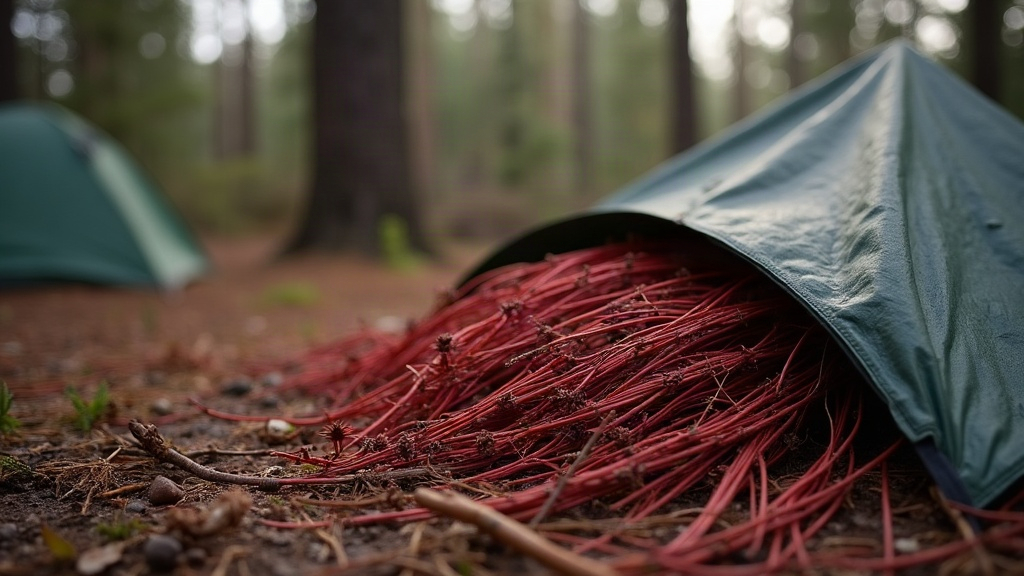
When temperatures drop, the ground under your tent will steal heat from your body faster than cold air ever could. That’s just physics: conduction beats convection every time you’re lying still on dirt. One of the oldest tricks in the bushcraft book is piling up a thick layer of red pine needles under your ground cloth. It traps air pockets, smooths out lumpy terrain, and cuts conductive heat loss dramatically, all for the cost of a few minutes raking.
Why Red Pine Needles Work So Well
Red pine (Pinus resinosa) needles are long, stiff, and springier than the softer needles you’d find on white pine. That stiffness is the whole trick:
- Air-trapping shape: The needles have a rigid, round cross-section, so they resist flattening out even when you roll over on them at 2am. That keeps the insulating air pockets intact under your full body weight.
- Water resistance: A thin waxy coating lets needles shed rain and dew instead of soaking it up, so they stay drier underneath you than leaf litter, grass clippings, or anything leafy would.
- Availability: Walk into a mature red pine stand and you’ll usually find a thick duff layer already carpeting the forest floor. No need to touch a living branch, just rake.
How Much Insulation Do You Actually Need?
For a real thermal difference in cool weather (above freezing, say 35–50°F / 2–10°C), you’re looking at:
- 4–6 inches of loosely piled needles before you ever lie down and compress them
- A footprint a bit wider than your tent or ground cloth, so you’re not left with bare, cold soil peeking out at the edges
- 8 inches or more under your hips and shoulders specifically, since that’s where your body weight presses hardest and flattens the layer quickest
Below freezing, don’t expect needles to substitute for a sleeping pad with a decent R-value. But stack the two together and the improvement is noticeable.
Step-by-Step: Building a Pine Needle Sleep Base
- Clear the site down to bare soil, pulling out rocks, roots, and any sharp debris.
- Rake needles from the surrounding duff. Go for dry, reddish-brown ones over fresh green needles, which hold onto moisture and won’t insulate nearly as well.
- Layer and fluff them across your sleep footprint. Don’t pack them down, just spread them loosely and let the air pockets do their job.
- Lay your ground cloth straight over the needle bed. This one step saves your tent floor from getting poked through and keeps needles from sticking to your gear.
- Pitch the tent as usual, then do a quick lie-down test. Feel for flat or thin spots and toss in more needles where needed.
Common Mistakes to Avoid
- Grabbing green, sappy needles: They hold moisture and can leave your ground cloth damp by morning.
- Skipping the ground cloth: Bare needles against a thin tent floor is asking for a puncture, and loose needles have a way of migrating into your sleeping bag and pack.
- Going too thin: A 1-2 inch layer flattens the moment you lie down. You’ll barely notice it’s there.
- Forgetting the pressure points: Your hips and shoulders flatten needles faster than anywhere else. Build those spots up extra thick before you settle in.
Leave No Trace Considerations
Stick to fallen, dead needles, never strip them off a living branch. When you break camp, scatter the pile back across the forest floor instead of leaving a compacted heap behind. It helps the ground bounce back and keeps your footprint about as light as it gets.
Pairing With Other Gear
Treat pine needle insulation as a bonus layer, not your whole strategy:
- Pair it with a closed-cell foam pad to lock in a dependable R-value
- Set up a bivy or tarp overhead so rain or dew doesn’t soak through the needle bed from above
- On frosty nights, slip a wool blanket or emergency blanket between the ground cloth and your sleeping bag for an extra margin of warmth
Conclusion
Red pine needles cost nothing and have been keeping campers warm for about as long as people have been sleeping outdoors. Build a thick, dry bed of fallen needles under your ground cloth, pair it with a sleeping pad, and you’ll get noticeably better warmth, cushioning, and dryness than you would lying straight on the ground. It’s a small skill, barely more than raking and layering, but it pays off the moment the temperature starts dropping.