Beginner Guide to Safely Batoning Knotty Hardwood
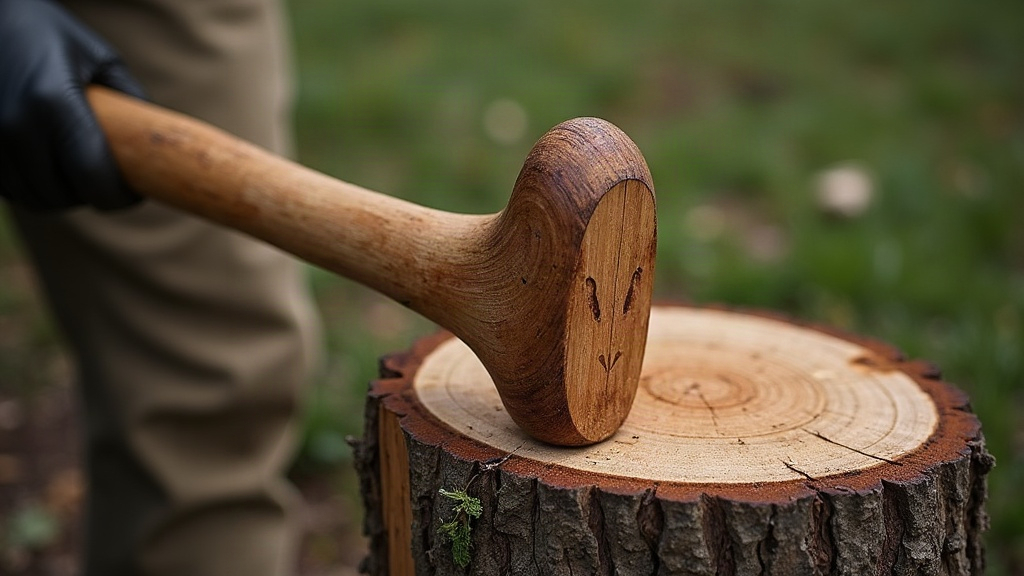
Batoning knotty hardwood with a full-tang knife is one of the trickier bushcraft skills to actually get right. Knots throw the grain into chaos, and that unpredictable pattern can bind your blade mid-swing or kick it sideways when you least expect it. Done properly, though, you can split tough, knotted logs for kindling without wrecking your knife or your knuckles. It just takes the right blade, a technique you’ve actually practiced, and the sense to walk away from a log that isn’t worth the fight.
Why Knotty Wood Is Different
A knot marks the spot where a branch once grew out of the trunk. Around that point, the grain doesn’t run straight anymore, it twists and locks together like woven rope. That’s what makes knotty wood such a pain:
- Harder to predict. Splits can curve off course, stall halfway, or even reverse direction mid-strike.
- More likely to bind your blade. Instead of separating cleanly, the wood often clamps down on the edge like a vise.
- Tougher on your gear. Knots are denser than the surrounding wood, and a blade not built for impact can chip right at the edge.
If you’re still new to batoning, don’t start here. Practice on clear, straight-grained wood until your strikes land consistently and under control. Knots can wait.
What Knife You Actually Need
Here’s the thing: not every knife belongs anywhere near a baton. A full-tang knife, meaning the steel runs as one continuous piece from tip to butt, isn’t optional for this. It’s the baseline. What to look for:
- Full-tang construction, not a partial or “rat-tail” tang, which can snap the moment it takes lateral stress.
- Blade length of 5 to 7 inches, enough to clear a typical log in one or two solid strikes.
- Thickness of 3.5 to 5mm, so the blade resists flexing or twisting once it’s buried in the wood.
- A drop-point or scandi grind, both of which hold up well under splitting forces.
- High-carbon or tough stainless steel (think 1095 or 3V), steel that can absorb repeated impact without chipping out.
Folding knives, thin kitchen knives, anything with a hollow handle, none of these should ever be batoned. The stress always finds the weakest point, and that’s exactly where these designs fail.
Step-by-Step: Batoning Knotty Wood Safely
-
Inspect the log first. Find where the knot sits, then set your blade to split around it rather than straight through the center, where the grain is most tangled and least cooperative.
-
Choose your baton. Grab a sturdy, dead (not green) hardwood branch, roughly 2 inches thick and 12 to 16 inches long. Skip anything soft, punky, or rotten; it’ll splinter in your hand before it does any real work.
-
Set the blade on end grain. Stand the log upright on something stable and flat, a flat-topped stump is ideal. Place the edge about an inch away from the knot, never directly on top of it.
-
Strike the spine, not the edge. Hit the back of the blade firmly and evenly. Keep your off-hand well out of the strike path the entire time, no exceptions.
-
Work the knife through gradually. If the blade binds against the knot, resist the urge to muscle it sideways. That’s exactly how blades snap or tangs crack. Rock the handle gently instead, or shift your angle to split around the knot rather than through it.
-
Reposition if needed. Still won’t split clean? Stop, try a different angle, or just admit that particular piece isn’t cooperating today. There’s no shame in setting it aside.
Common Mistakes to Avoid
- Striking directly on a knot. This alone causes more bent and chipped blades than anything else on this list.
- Using a metal hammer instead of a wooden baton. Metal-on-metal impact sends shock straight through the tang and can damage the spine over time.
- Batoning a partial-tang or hollow-handle knife. The handle can crack, or worse, separate from the blade entirely.
- Keeping your free hand too close to the blade. Always baton with the edge pointed away from your body, every single time.
- Forcing a bound blade sideways. Twist it free carefully, or pull it out entirely. Torquing it is how you end up with a two-piece knife.
When to Stop
If a knot is big, spans most of the log’s diameter, or your blade keeps binding after two or three tries, that log has won. Set it aside for an axe or a saw. Even a solid full-tang knife isn’t built to fight dense, interlocked grain over and over, and that repeated binding is precisely what leads to snapped tips and bent blades down the road.
Final Thoughts
Safely batoning knotty hardwood really comes down to three things: a genuinely full-tang knife built to take impact, a controlled striking technique that keeps your hands out of harm’s way, and enough judgment to work around the hardest parts of the wood instead of through them. Get comfortable with these basics on easier wood first, and knotty logs stop being a gear-breaking gamble. They just become another manageable task in camp.