Paracord vs Bank Line for Securing a Canoe at Tidal Shoreline
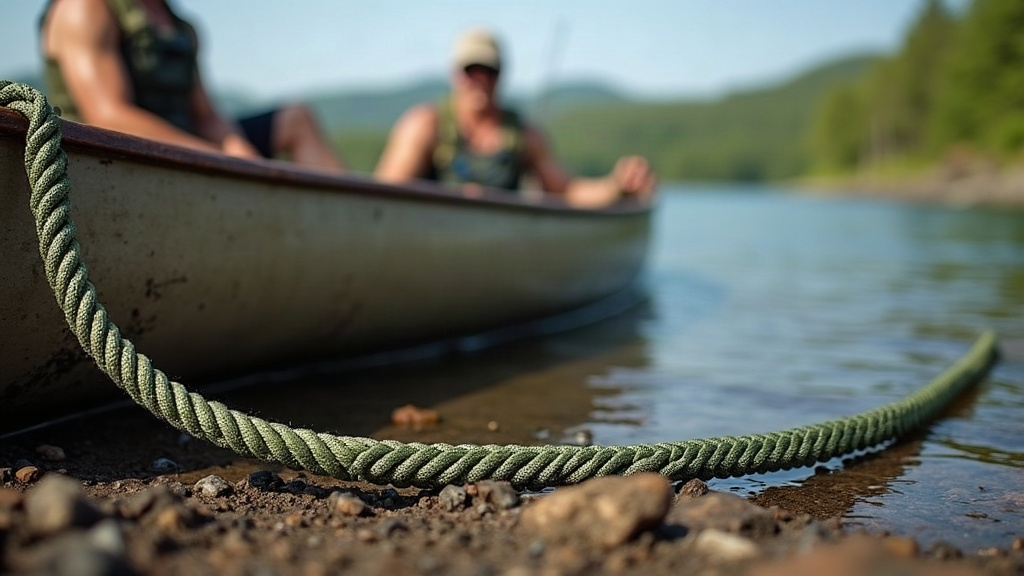
If you’re mooring a canoe on a tidal shoreline, bank line generally beats paracord for the job. It’s cheaper to sacrifice, holds knots better when wet, and doesn’t stretch as much under a shifting tidal load. That said, paracord still wins on raw strength and abrasion resistance when you need one critical anchor line to hold no matter what. Here’s how the two stack up, and which one actually belongs in your canoe rig.
Why Tidal Mooring Is a Different Problem
Tying off a canoe on a lake or a calm river is about as simple as camping tasks get. Loop it, cinch it, walk away. A tidal shoreline throws that logic out the window:
- Water can rise or drop several feet in a matter of hours. Your line needs enough slack to keep the canoe from either stranding on dry mud or drifting off on the next swell.
- Cordage sits in salt water, mud, and baking sun, conditions that chew through materials much faster than a typical freshwater trip ever would.
- Knots get waterlogged, swell up, and often need to come undone fast, whether that’s an incoming tide, a sudden squall, or an unwelcome visitor sniffing around camp.
That last point is really where paracord and bank line part ways.
Paracord: Strong, But Not Built for Wet Knots
550 paracord (7-strand nylon core, nylon sheath) is the go-to multi-tool cordage for camping and bushcraft, and for good reason.
Strengths:
- Rated to roughly 550 lbs breaking strength, which is overkill for most canoe mooring situations.
- The woven sheath shrugs off rocks and barnacle clusters better than most alternatives.
- Has some give in it, which helps absorb shock from wave action or boat wake instead of transferring it straight to the hitch.
Weaknesses for tidal use:
- Nylon soaks up water and swells. A clove hitch or trucker’s hitch that was easy to tie at low tide can turn into a stubborn, swollen knot by the time the water comes back up.
- Ironically, the same stretch that cushions shock loading also lets your canoe swing further than you’d expect. Six inches of give per knot adds up fast across a whole mooring setup.
- It’s not cheap to treat as a throwaway line. Losing a length of 550 cord to salt corrosion on a cleat stings a lot more than losing a few feet of twine.
Bank Line: The Quiet Favorite for Tidal Camps
Bank line (tarred nylon or polyester seine twine, think Paracord Planet’s or SGT Knots’ tarred versions) has quietly been the trapper’s and fisherman’s secret weapon for decades. Turns out it works just as well at the shoreline.
Strengths:
- Tarred bank line resists water absorption almost entirely, so knots stay workable even after sitting underwater through a full tide cycle. No fighting a swollen bowline at 2 a.m.
- Barely any stretch, which means your canoe sits roughly where you left it as the water climbs, not three feet further out.
- It’s absurdly cheap per foot. Run a longer scope, double up your lines, or cut off a chafed section and retie without a second thought about cost.
- The thinner diameter ties faster and tighter, which matters a lot when your hands are cold, wet, and you’re racing an incoming tide.
Weaknesses:
- Lower breaking strength, typically somewhere between 90 and 700 lbs depending on ply count, so it won’t shrug off a hard wave strike or a careless boat wake the way paracord might.
- Thin cordage under sudden load can bite into bare skin. Keep gloves handy if you’re hauling tight.
- Less abrasion resistance than paracord’s sheath, so sharp rocks or an oyster bed nearby will wear it down faster.
Which One Should You Actually Use?
Use bank line if:
- You’re running a semi-permanent camp across multiple tide cycles, not just an overnight stop.
- You want a longer painter line with real scope built in to handle the swing.
- You’d rather lose a cheap line to a storm surge than mourn an expensive one.
Use paracord if:
- You need one short, high-strength tie-off, say, clipping to a solid tree trunk or a piling that isn’t going anywhere.
- You want double duty out of your cordage for shelter lines, gear repairs, or first aid, and don’t feel like packing two separate spools.
- Abrasion against rock or coral worries you more than a knot swelling shut.
Best practice, combine both: Plenty of experienced canoe campers run a bank line painter for the main tidal scope (tied with a bowline, or a round turn and two half-hitches, to a fixed anchor well above the high-tide line) and keep a short loop of paracord as a backup or quick-release safety tether. Belt and suspenders.
Practical Tips for Tidal Mooring
- Tie off above the predicted high-tide mark, not wherever the water happens to sit right now.
- Leave 1.5 to 2 times the expected tidal range in slack. Guessing short is how canoes end up floating away at 3 a.m.
- Stick with a round turn and two half-hitches, or a bowline. Both release easily even after the cordage has swollen.
- Check local tide tables before setting camp. A 10-foot tidal range isn’t unusual in plenty of estuaries, and that’s a lot of slack to account for.
- Walk the lines each morning and check for chafe against rocks, oyster shells, or dock cleats. Five minutes of inspection beats losing a canoe.
Bottom Line
For the specific headaches of a tidal shoreline, swelling knots, rising and falling water, constant salt exposure, tarred bank line is simply the more practical everyday cordage. Paracord still earns its spot for a single high-strength anchor point or as multi-purpose camp cord you can lean on for other jobs. Pack both, and whatever tide you’re up against, you’ll have the right tool already in hand.