How to Prevent Wood Smoke from Following You Around a Rainy Campsite
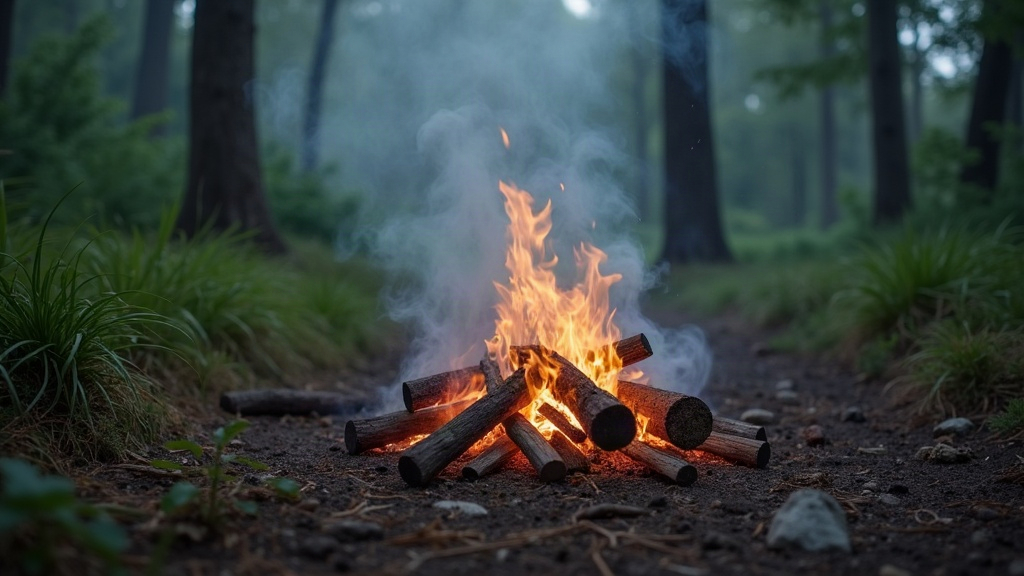
Wood smoke has an uncanny way of finding your face on rainy campsites. You scoot your chair to the other side, and somehow, five minutes later, it’s back in your eyes. There’s a reason for that, and it’s not bad luck. Low atmospheric pressure, cold damp air, and wet fuel all team up to produce heavy, incomplete-combustion smoke that sinks and spreads instead of rising up and away like it should on a clear night. The good news is that a few changes to your fire setup, wood choice, and seating position can cut that smoke problem down dramatically.
Why Smoke Follows You More When It Rains
A handful of physical factors explain the behavior:
- Low pressure systems that bring rain also pin smoke closer to the ground instead of letting it rise and scatter.
- Cooler, denser air holds onto smoke particles longer, so they hover around head height instead of drifting off.
- Wet or green wood burns cooler, which means more visible, heavier smoke since the combustion never really finishes the job.
- Shifting or swirling winds, which are common right before and during storms, create air currents that have no fixed direction. One minute it’s calm, the next the smoke is in your lap.
None of this is smoke being “smart.” It’s just physics, and it happens to be working against you.
Fix #1: Burn Only Dry, Seasoned Wood
Wet wood is public enemy number one for thick, chasing smoke. A few things help, even in the rain:
- Store firewood under a tarp or in a covered rack before the rain hits, not once it’s already pouring.
- Split logs smaller. More surface area means faster drying and a hotter burn.
- If you camp a lot, pick up a moisture meter. You’re aiming for under 20% moisture content.
- Keep a sealed ziplock bag of dry kindling on hand (birch bark, fatwood, or even dryer lint) as a backup fire starter.
A hotter fire burns more completely, so you get less smoke overall, not just less of it drifting your way.
Fix #2: Build a Smoke-Smart Fire Structure
How you stack the wood matters almost as much as how dry it is:
- A teepee or log cabin structure lets oxygen reach the flames freely.
- Don’t pack the wood too tight. A smothered fire smolders, and smoldering means smoke.
- Set up a fire reflector behind the flames (a log wall or a rock barrier works fine) to push heat and smoke upward and away from where you’re sitting.
Fix #3: Position Seating Based on Wind, Not Convenience
Rain tends to bring restless wind. Before you drag chairs over:
- Throw a pinch of dry leaves or dust near the fire and watch where it goes. That’s your real wind direction, not the one you’re guessing at.
- Sit to the side of the wind, not directly downwind of it.
- If the wind keeps changing, rotate your seats every 20 to 30 minutes. Chasing the wind beats chasing the smoke every time.
Fix #4: Use a Tarp or Canopy Strategically
A rain tarp pitched wrong can trap smoke right where you’re sitting instead of keeping you dry.
- Pitch it high and at an angle so smoke can vent out the sides and up.
- Leave at least 3-4 feet of clearance above the flames, no exceptions.
- Skip anything close to a fully enclosed shelter around the fire pit. The fire needs airflow to breathe.
Fix #5: Add Dry Supplemental Fuel
Wood that’s only slightly damp can still work if you boost the burn temperature with:
- Fatwood sticks (that resin-heavy pine burns hot and fast)
- Charcoal briquettes as a base layer for steady heat
- Dryer lint or wax-dipped cotton balls as reliable starters
Hotter coals push a cleaner secondary burn, and that alone can cut visible smoke by a lot.
Quick Troubleshooting Checklist
- Wood feels damp? Split it smaller and dry it near the fire, never in it.
- Smoke hugging the ground? That’s a low pressure system at work. Expect more smoke no matter what you do.
- Smoke keeps drifting toward you? Move your chair. Don’t try to outlast the wind.
- Tarp trapping smoke underneath? Raise it and give it more of an angle.
Final Thoughts
Getting chased around the fire by smoke on a rainy night isn’t rotten luck, it’s a predictable outcome of weather, wet wood, and how the fire is built. Dry your wood ahead of time, give the fire room to breathe, check the wind before you set up chairs, and pitch your tarp with real clearance. Do that, and you can still get a warm, mostly smoke-free evening even when the sky isn’t cooperating. It really does come down to small adjustments, the difference between a night spent wiping your eyes and one spent actually enjoying the fire.