Best Native Wood for Carving Tent Pegs in Wet Forest Conditions
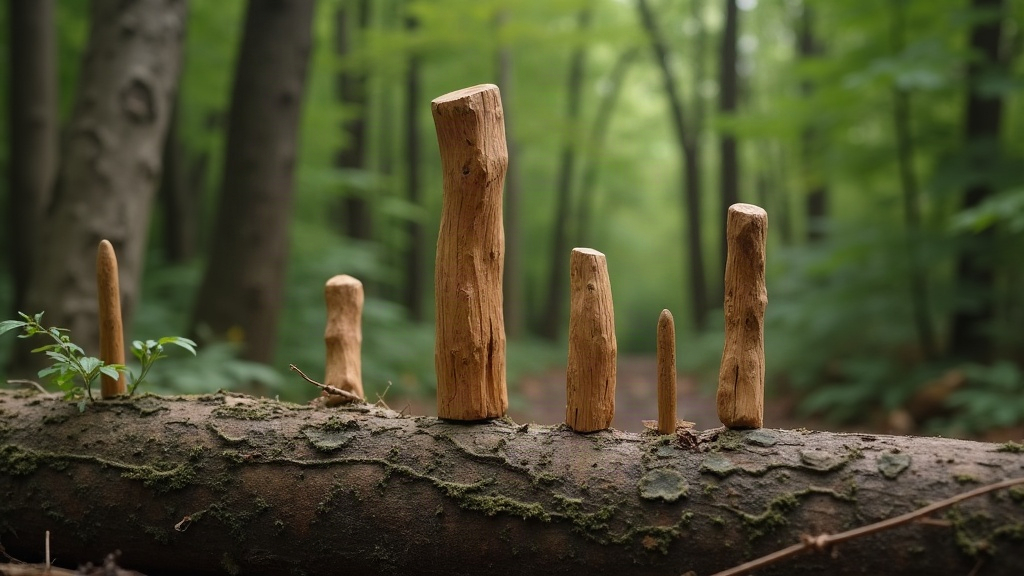
The best native wood for carving tent pegs in wet forest conditions is usually a fresh, straight-grained hardwood such as hazel, ash, oak, beech, or hornbeam. These woods resist splitting, hold their strength even when damp, and shape up into dependable stakes for shelters like a one-pole tarp setup with nothing more than a knife or small saw. That said, the ideal choice really depends on what’s growing around you. Learning to spot strong wood characteristics matters far more than memorizing one “best” species.
What Makes a Good Wooden Tent Peg?
A tent peg’s job is simple on paper: transfer tension from your guyline or tent loop into the ground. But in wet forest soil, that peg has to survive several stresses all at once:
- Soft, saturated soil lets smooth or short pegs pull free with surprisingly little force.
- Damp wood gets more flexible and easier to crush under a mallet.
- Roots, stones, and buried debris can split a poorly carved stake on the first strike.
- Rain-swollen cordage puts extra tension on the peg, often more than you’d expect.
When picking a branch or small sapling stem, look for these qualities:
- Straight grain: grain running parallel to the length means the peg is far less likely to snap under load.
- Dense wood: heavier hardwoods hold a point and notch much better than light, spongy species.
- Few knots: knots create weak spots and make carving unpredictable, sometimes the blade just skates off.
- Live or recently fallen wood: fresh wood carves easily, though you should never take it from protected areas or cut living trees needlessly.
- A diameter of 2 to 4 cm: roughly the width of your thumb to two fingers, enough for most three-season shelters.
Always check local regulations first. Plenty of parks and managed forests ban cutting or collecting wood outright. If you’re unsure, carrying a few lightweight manufactured stakes is the lowest-impact backup plan.
Best Native Woods for Wet Forest Tent Pegs
These species show up across most temperate forests and make practical choices wherever local rules allow responsible collecting.
Hazel
Hazel might be the single most useful wood in improvised campcraft. It tends to grow in long, straight stems, especially in coppiced woodland where old cutting has encouraged new shoots. Fresh hazel carves easily yet holds up fine for ordinary tarp or tent duty.
Pick a stem with few side branches and a fairly even thickness. Hazel is great when you need several matching pegs in a hurry, ten minutes with a knife and you’ll have a full set. In loose mud, carve them a bit longer than you normally would, since hazel is moderately light compared to oak or hornbeam.
Ash
Ash punches above its weight, strong for how light it is, with straight, resilient grain. A fresh ash branch turns into a peg that shrugs off repeated mallet strikes far better than softer woods manage.
The catch is availability. Ash dieback has hit many regions hard, so don’t cut a living ash tree just for tent stakes. If a recently fallen limb happens to be legally fair game, though, ash is outstanding for high-tension ridgelines and tarp corners.
Oak
Oak is dense, durable, and nearly impervious to crushing. When the ground is full of roots or packed hard, oak is about as good as native wood gets for tent pegs. Carve it well, let it dry between trips, and a single oak stake can last for years of camping.
The downside: green oak fights back more than hazel does. Use a sharp knife, cut in controlled strokes away from your body, and don’t try to whittle it down to a needle point. An oak peg should look sturdy, almost stubby, not delicate.
Beech
Beech is hard, smooth-grained, and common across much of Europe and North America. Fresh beech carves cleanly and forms a strong peg with a crisp, well-defined notch for cordage.
It’s not as weather-resistant over the long haul as oak, but for a weekend or week-long camp it performs beautifully. Beech is a solid, no-drama choice for stakes going into firm, damp forest soil.
Hornbeam
Hornbeam is brutally tough and dense, sometimes called “ironwood” for good reason. It makes tent pegs that shrug off bending and splitting almost entirely. That hardness pays off in difficult ground, but be warned: it’s slow going with a basic pocketknife.
Save hornbeam for when you need a handful of very strong stakes rather than a quick full set of pegs. A small folding saw will save you a lot of arm strength when cutting it to length.
Woods to Avoid
Not every straight-looking branch deserves to become a tent peg. Steer clear of:
- Softwoods like spruce, fir, or pine: usable in a pinch, but they tend to split under impact and lose grip fast in wet soil.
- Rotten or punky wood: dark, crumbly, unusually light wood has already lost its structural integrity, no amount of careful carving fixes that.
- Dead branches still attached to trees: they look dry and solid but often snap without warning, sometimes mid-swing.
- Wood with lots of knots or twists: hard to carve cleanly and prone to failing right where the grain changes direction.
- Very dry, seasoned hardwood: strong, sure, but stiff and prone to cracking under rough carving, especially near the tip.
Willow grows thick near wet ground and is tempting because it’s everywhere, but it’s usually too flexible for a high-tension tent corner. Made longer and a bit thicker, it can still do fine for low-load tarp edges.
How to Carve a Strong Tent Peg
For wet forest conditions, aim for pegs roughly 20 to 30 cm long. Go longer on loose, muddy ground or exposed campsites where wind adds extra pull.
Basic Peg Shape
- Cut the branch to length with a saw or a careful chopping technique.
- Leave the lower end thicker and carve a gradual, four-sided point.
- Keep the point blunt enough that it won’t split the first time it hits a root or stone.
- Carve a shallow notch about 2 to 3 cm below the top.
- Leave a broad head above the notch, something you can actually strike without glancing off.
A four-sided point usually beats a long, round pencil point. It bites into soil just as well while leaving more wood behind the tip to resist splitting.
Make It Hold Better in Mud
In saturated soil, how you set the peg matters just as much as what it’s made of. A few things that genuinely help:
- Drive the peg at roughly a 45-degree angle away from the tent, not straight down.
- Position the guyline so it pulls low, in line with the stake rather than yanking it upward.
- Make the peg longer instead of just thicker, length does more for holding power in mud.
- Add a small cross-stick behind the peg to act as a deadman anchor.
- Bury a horizontal stick, rock, or log section as an anchor wherever regular pegs simply won’t hold.
When the ground is really soft, no amount of clever peg carving will save you. A deadman anchor (an object buried perpendicular to the direction of pull) offers far more resistance than any conventional stake ever could.
Safety and Low-Impact Practice
Carve seated or kneeling, with the work braced well away from your legs. A sharp knife is actually safer than a dull one, since it needs less force and less chance of slipping. Never hammer a peg in with a sharp rock if a boot heel, wood baton, or smooth stone is nearby; sharp impacts split the head fast.
When breaking camp, pull every single peg, fill in holes where you reasonably can, and scatter any unused natural materials back into the undergrowth. The goal is a secure night’s sleep that leaves no trace and doesn’t scar the woodland behind you.
Conclusion
For reliable shelter in wet weather, reach for straight-grained native hardwood whenever you’re allowed to. Hazel is quick and practical, ash is resilient (when you can find it), oak and beech are both strong workhorses, and hornbeam wins when the ground fights back. Carve pegs longer than you think you need, give them broad heads, drive them at a low angle, and switch to a deadman anchor the moment muddy soil stops cooperating.